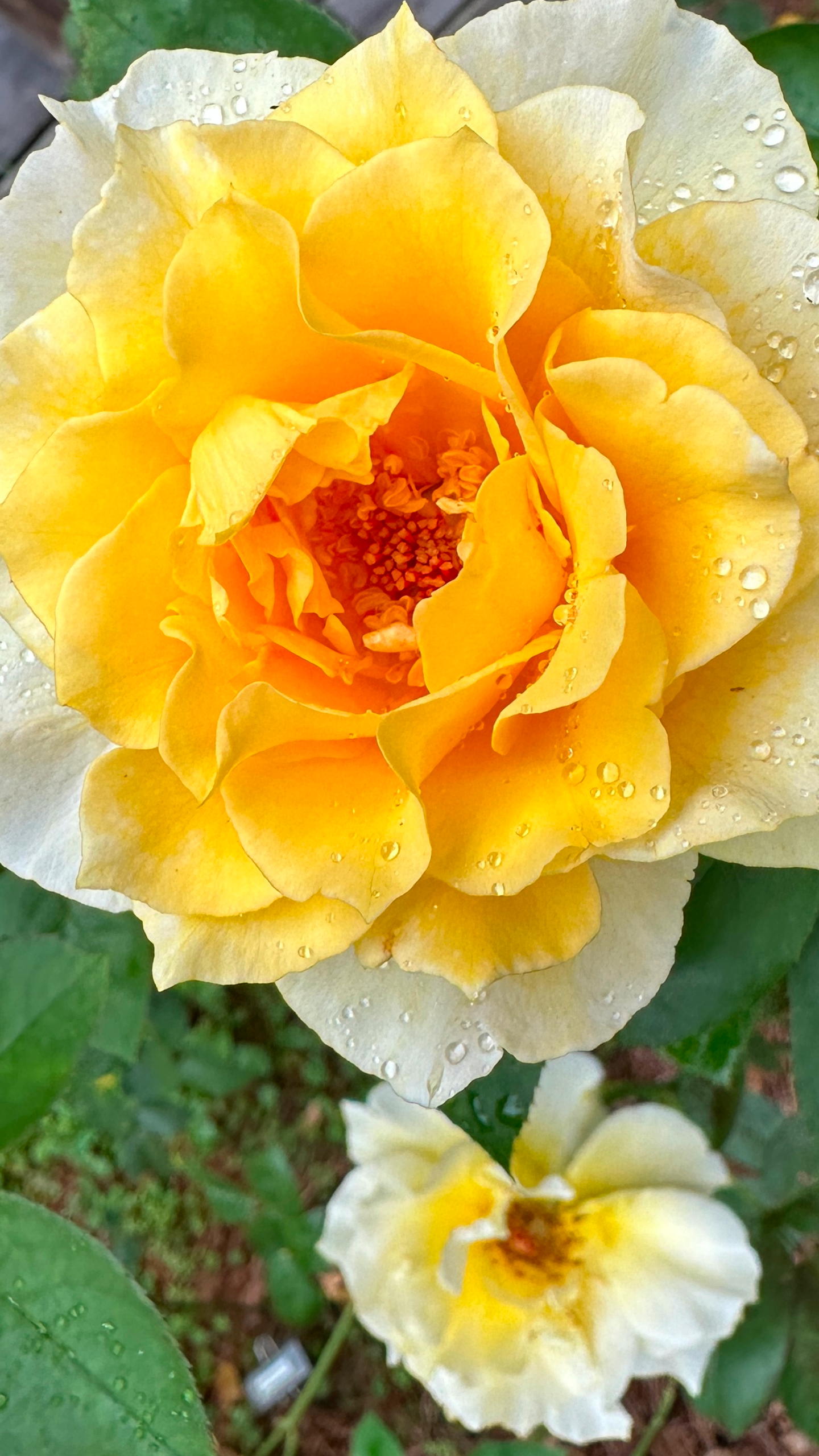


Observe
Here we are again in the dog days of summer.
A good fan is the best friend this time of year for you or your four-legged companion. It was definitely hot here; our warmest day this month averaged 98 degrees, and a few areas were over 100 degrees. Weeds are still thriving and expanding their range, and the deer keep showing up for dinner, so it must not be too hot for any of them. On the other hand, at least the Japanese beetles are gone.
Section 1 / 8
Water
January and March were very wet this year, but the rest of the has been on the dry side. June gave us well under half our normal rainfall. July has been a lot rainier, a typical Georgia summer, with random, pop-up, thunderstorms. There’s no rhyme or reason to who gets rain, or how much. One garden will be bone dry, while two blocks over you’re drowning. So far (as of the 23rd), we are averaging about 0.2 inches less than a full month’s rainfall. We averaged 4.5 inches around the area, but Gainesville has had only 2.4 inches, while Jonesboro had 7.6 inches. Depending on where you live around Atlanta, the US Drought Monitor shows your soil moisture level as “abnormally dry”, in “moderate drought”, or in “severe drought.”
The National Weather Service expects temperatures to remain above normal in the next three months, with rainfall leaning toward the wet side over that period. As always, check the rainfall in your garden. Read your gauge, empty it, and record the amount so you know how much has fallen in the last week. Based on that amount, plan to water as much as you need to provide one to two inches of water per week. If you water your roses by hand, turn your spray wand upwards to wash the undersides of the leaves with a hard spray, especially those at the bottom. This will help to keep spider mites at bay when there isn’t enough rain to do the job.
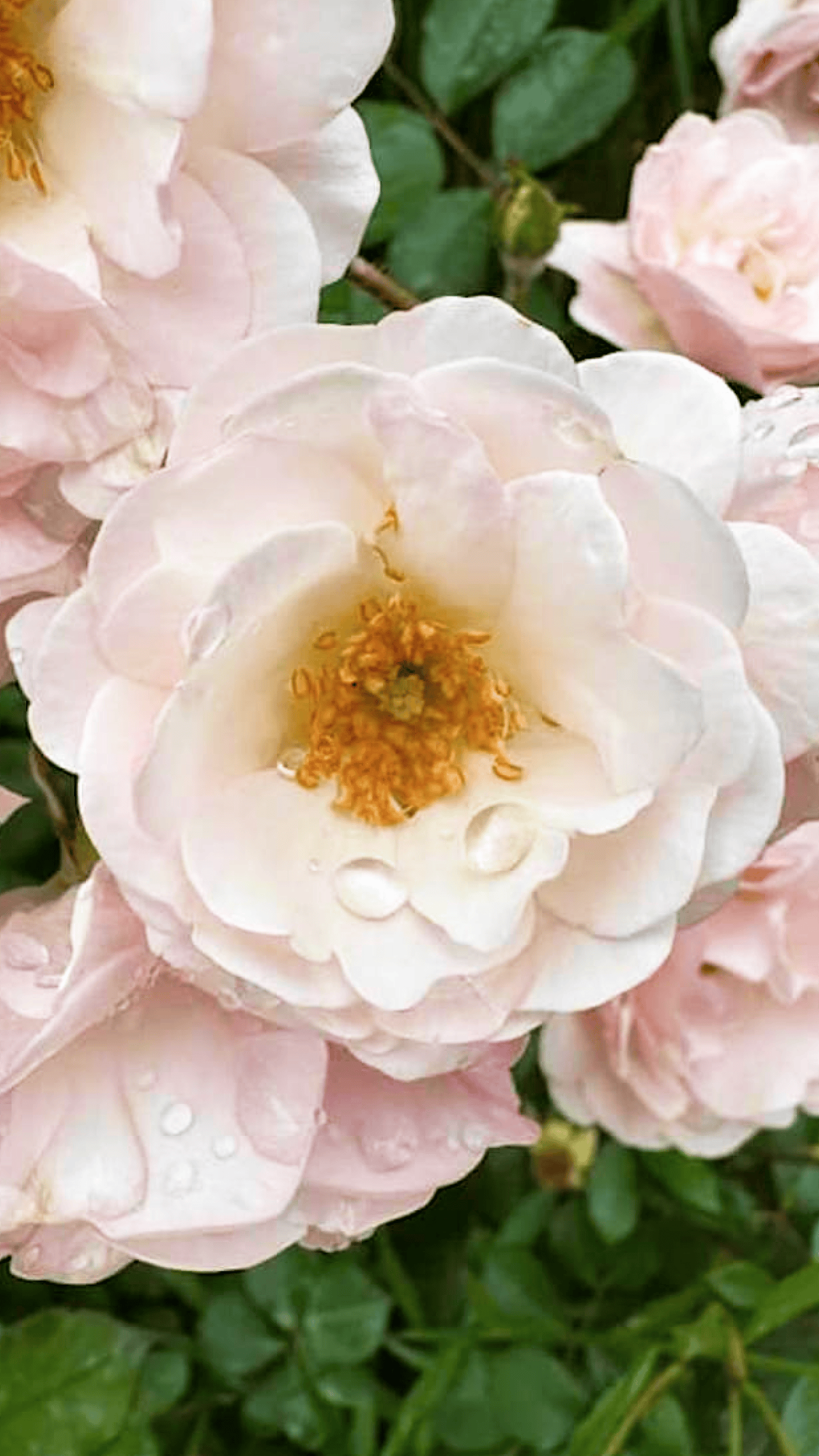
This rose: Mrs. R. M. Finch
This rose:
Section 2 / 8
Feed
Keep feeding your bushes so they’ll have energy to reinvigorate themselves for fall. Early August will be an ideal time to add organic fertilizers like alfalfa tea, fish emulsion, Purely Organic, Mills Magic Rose Mix, Milorganite, or whatever your favorite “witches’ brew” may be. Organics release their nitrogen slowly, so they won’t burn roots the way granular fertilizers could do in dry soil, but will be available in time for the return to active growing in the fall. Organic fertilizers also feed the creatures in the soil and help to maintain the pH balance.
Tea is my favorite summer beverage, and it may be yours as well. Want to make alfalfa tea for your roses? Take a 32-gallon trash barrel with a tight-fitting lid. Add 12 cups of alfalfa meal and fill the barrel with water. Seal the lid, leave it to stew for a couple of days, then open carefully and stir. Give it another day or so (up to a week total), then stir again. You may add any of the following you wish: two cups of dry, water-soluble fertilizer like Miracle Gro or 20-20-20; some fish emulsion; some Epsom salts – anything you have around that seems tasty for your roses. Stir well. Now, being careful not to breathe (I use my respirator while working with the tea), and wearing nitrile gloves to protect your hands from the undying stench, scoop out one gallon of tea at a time and apply it to your rose bushes. For smaller bushes, use one-quarter to one-half as much. With the sludge that’s left, you can start a second batch. After that, dump any remaining sludge somewhere in your garden (make some special plant happy!) and start over with fresh alfalfa. Your garden may be pungent, but your roses will be happy.
Section 3 / 8
Pests and pestilences
Mother Nature has been supplying lots of opportunities this summer for blackspot to thrive, when water stands on rose leaves for several hours or overnight after those late afternoon rains. Spray regularly to keep blackspot under control. You’ll need to apply most fungicides at seven-to-ten-day intervals this time of year to prevent infections, and prevention is much more effective than trying to treat after an infection has set in. When blackspot runs amok, shorten the spray interval to three-to-five days for a couple of weeks. Use a “contact” fungicide like mancozeb or Manzate every time you spray (Daconil is also a contact fungicide, but causes leaf burn when temperatures are above 80 degrees). Combine that with a “systemic” fungicide like BannerMaxx/Honor Guard (propiconazole), Cleary’s 3336, Compass, Azoxystrobin, or BioAdvanced Disease Control for Roses. Rotate the systemic fungicide every few times you spray to minimize pesticide resistance, choosing a different active ingredient and a different Mode of Action when you rotate. (Not sure what to choose? Call me.) Be sure to water before spraying to prevent chemical burn.
Don’t like to spray? Neither do I. You could use a soil drench/granules like BioAdvanced All-in-One Rose and Flower Care every six weeks. Water before you apply it and frequently during the following six weeks, or roots may burn.
Use insecticides sparingly, but if thrips are causing you grief (brown spots and brown edges on your blooms) mix up a small batch of an insecticide like Conserve (spinosad) or Merit. Mist just the buds with this mixture every two or three days, at a time when there are no bees active in your garden (early morning or late evening).
Mites multiply very quickly in hot, dry weather, and even faster when your insecticides are killing off the good insects that normally help to keep spider mites at bay. If you were to include insecticides in your tank every time you sprayed, spider mites would run wild, so don’t do that. Add a miticide like Avid or Forbid or TetraSan to your spray regimen when spider mites are a problem. Use a pressurized (pump-up or battery-powered) sprayer rather than a hose-end sprayer to deliver the most effective dosage when you spray.
If you choose not to use hardcore chemicals in your garden, you can still have beautiful roses. One less-toxic option is to use neem oil to prevent fungal infections. We’re told that most types of neem oil will break down in the sun, while others, like Captain Jack’s Neem Max, may be able to resist this “sunburn” and thus last longer on your bush. Apply only when temperatures are above 60 and below 85 degrees. Another organic option is products containing Bacillus amyloliquefaciens, like Revitalize biofungicide.
Mix fresh chemicals each time you spray. Left-over diluted chemicals won’t be effective the next time you need them. Spray in the coolest part of the day to prevent chemical burn on foliage and heat stress on you. Garden sanitation will help to keep diseases and insects under control. Deadhead regularly and remove all infected debris from your garden.
If you are still bothered by deer in your garden, you may want to explore barriers to exclude them, or scents to discourage them. Sadly, scent-deterrents wash off in the rain, and deer get used to them before long. Fences are better, tall ones (at least eight feet).
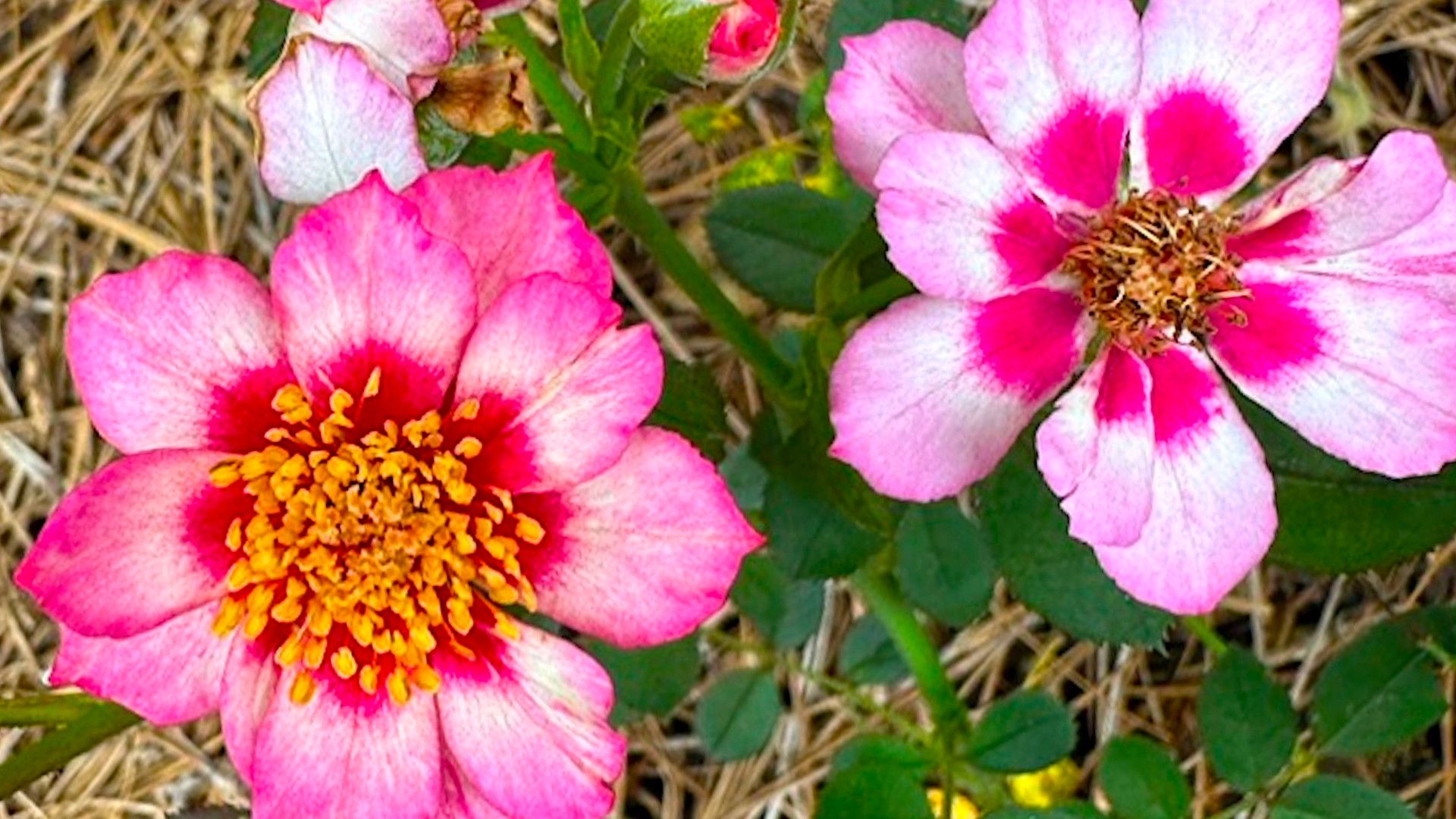
This rose: Diane Somers
Section 4 / 8
Deadhead
Remove dead flowers immediately to encourage the next bloom cycle, cutting just above the first five-leaflet leaf. I sometimes forgo the pruners and just snap off each spent bloom by hand. There’s an “abscission point” on the peduncle below the bloom where the bush would naturally shed that spent bloom (you’ll find it when you snap). If you have to fight the plant to break off that spent bloom, you need to be watering more. Remove your cuttings and other plant debris from the garden promptly, so they don’t harbor pests to re-infect your roses.
Section 5 / 8
Late summer pruning
August is rejuvenation time. For better fall roses, cut bushes back by about one-quarter in mid-to-late August, leaving plenty of leaves to spur new growth. Follow up with a round of organic/slow-release fertilizer and plenty of water. Cutting back in late summer will stimulate growth for fall blooms, promote strong stems for your next round of flowers (rather than on the twiggy ends of canes they may be trying to bloom on now) at eye level (unless you’re 10 feet tall, it’s hard to see that last bloom on ‘Mr. Lincoln’), and help you to be ready for the beautiful roses of fall.
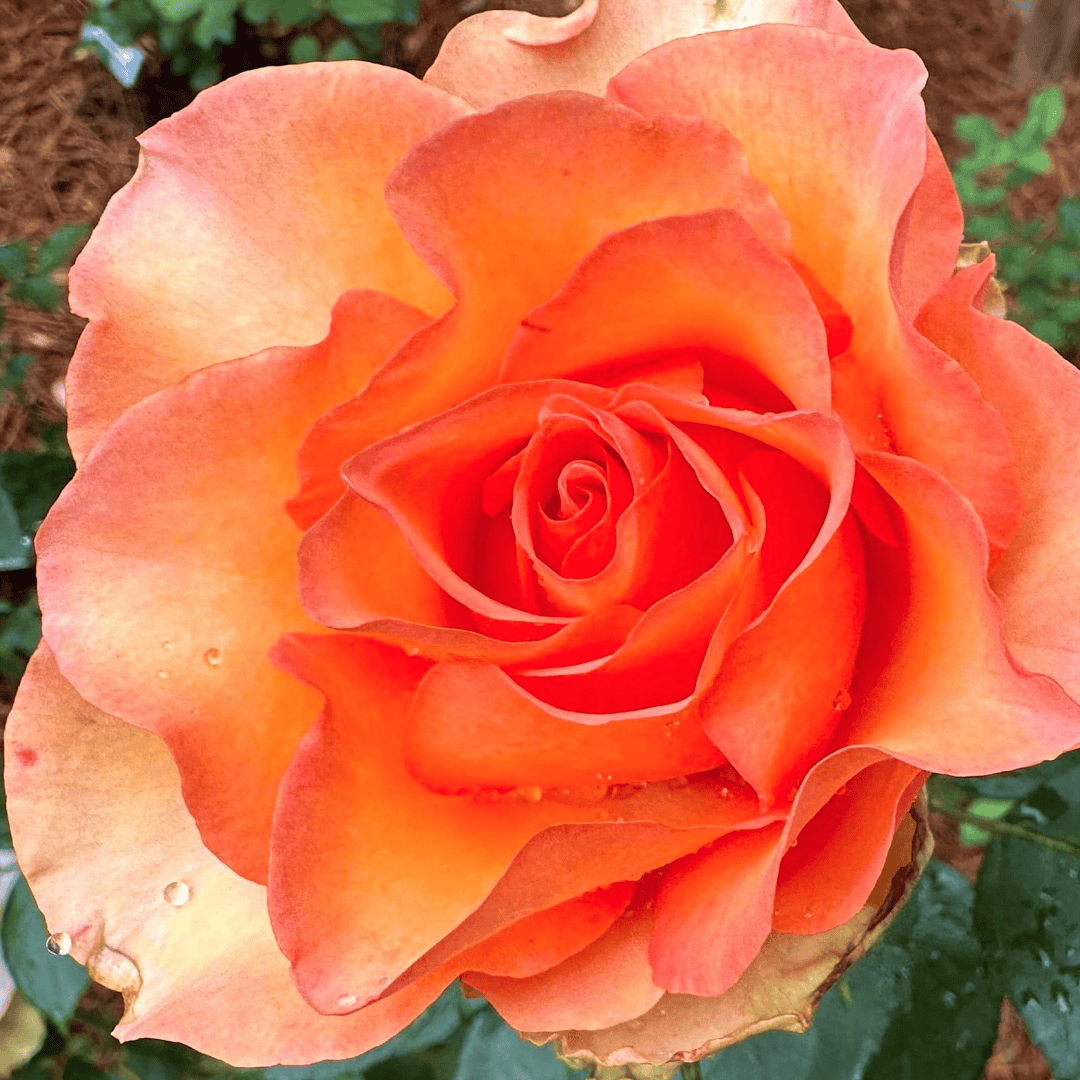
This rose: Sunstruck
Section 6 / 8
Get ready to show off
If you like to visit rose shows, share your roses with the public, or just compete in the rose world, there are fall shows coming up. The South Carolina Rose Society show will be in Columbia, SC, on October 11-13. The Deep South District show will be on October 12 in Gainesville, FL; and the Tallahassee Rose Society show on October 26.
We will need to time our summer cut-back to have blooms to take to a show, or for any other special occasion. On average, big roses will take 40 to 60 days from cut-back to bloom. Minis take from 30 to 45 days to cycle. The time it takes a rose bush to produce new blooms varies based on the number of petals (more petals will take longer) and the weather (hot weather speeds up recycling, but results in smaller blooms). Figure out your target date to cut, then get started. On that date (and maybe 2-3 days on either side of it) cut back all rose bushes, whether they are currently in bud or bloom. Yes, you need to cut off all buds and blooms at that time! Then feed and water well, and keep doing that until the show. As you stroll through your garden, look for side-buds to remove to produce one glorious bloom. Or, if you already have a spray forming, pinch out the center bud now, to produce a more pleasing, full spray.
Section 8 / 8
Enjoy
Stop and smell your roses, cut some for the house and to share with neighbors and friends and the local library. Take a morning glass of iced (decaf) coffee or tea to the garden to enjoy amid the colors and fragrances of your garden. Stay cool and healthy!